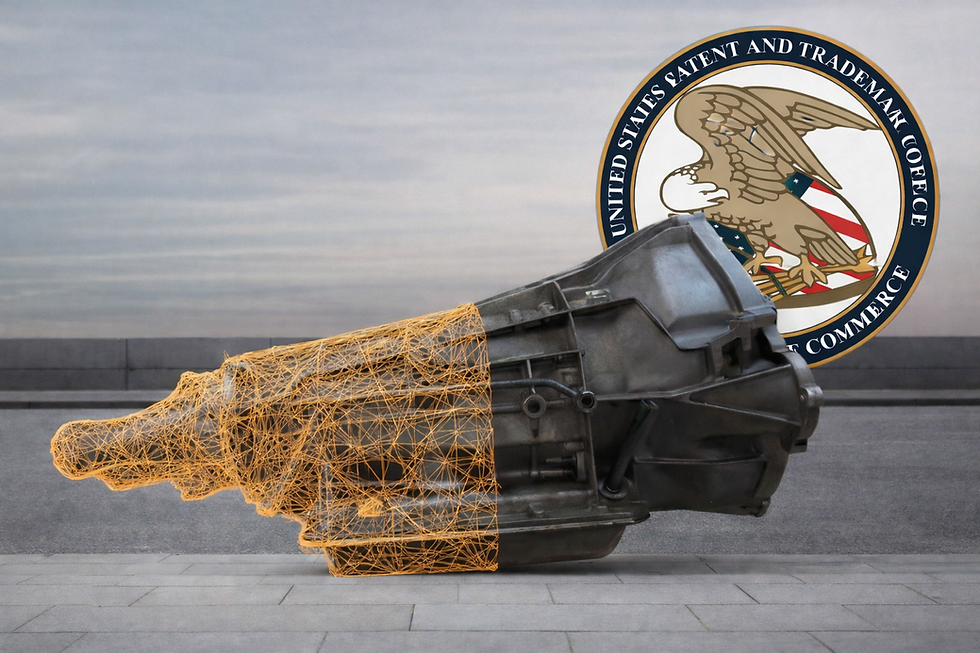
Navigating Right to Repair Mandate: How Physical AI Transforms OEM After-Service

The "Right to Repair" movement has moved from a niche advocacy effort to a global regulatory reality. For Original Equipment Manufacturers (OEMs), this isn't just about compliance; it's a profound shift that demands a re-evaluation of product design, supply chains, and, critically, after-service strategies. The good news? Advanced technologies like Physical AI, offer a proactive solution to not only meet these new mandates but to transform challenges into strategic advantages.

Key Takeaways
Right to Repair is Law: New EU and US regulations mandate broader access to parts, tools, and documentation for consumers and independent repair shops.
Compliance is Complex: OEMs face challenges in managing extensive spare part inventories, preventing "parts pairing," and providing usable repair guidance to non-experts.
Physical AI is the Solution: Corvus platform uses advanced AI to identify components, provide guided repair instructions, streamline parts ordering, and validate repairs, all via an edge device like a smartphone.
Strategic Advantage will follow: Deploying Corvus enables OEMs to reduce costs, enhance customer loyalty, gain valuable product insights, and contribute to a sustainable circular economy.
From Paris to Portland: A Growing Imperative
The Right to Repair movement champions the consumer's ability to repair their own products or choose an independent repair service rather than being forced back to the manufacturer. Its roots trace back to early 20th-century antitrust concerns, evolving in recent decades with the rise of complex, digitally-locked consumer electronics and appliances. The rationales behind the movement include:
Environmental Sustainability: Reducing electronic waste (e-waste) by extending product lifespans.
Consumer Choice & Cost Savings: Empowering consumers with more affordable repair options and fostering competition in the repair market.
Economic Opportunity: Creating jobs and opportunities for independent repair businesses.
Digital Freedom: Challenging manufacturers' control over products post-sale, especially concerning software and proprietary parts.
As its importance grew, the regulations followed:
European Union: The EU Right to Repair Directive (2024/1799) is a landmark piece of legislation. It mandates that manufacturers provide access to spare parts, repair information, and diagnostic tools for many product categories (e.g., smartphones, tablets, washing machines) for up to 10 years. It also seeks to limit "parts pairing" and improve the availability and affordability of repair services.
United States: While there's no overarching federal law, several states, including California (SB 244), New York, Minnesota, and Oregon, have passed their own Right to Repair acts. These vary in scope but generally require OEMs to make parts, tools, and documentation available to consumers and independent repair shops. The trend is clearly towards broader adoption.
Impact and Challenges for OEMs
As one can expect, these regulations create significant operational and strategic challenges for OEMs:
Spare Parts Management: Ensuring availability of a vast array of spare parts for up to a decade, managing inventory, and making them "reasonably priced" for independent channels is a logistical nightmare.
Accessible Documentation: Translating complex engineering manuals into user-friendly guides for non-expert repairers, and making diagnostic tools universally available, is a substantial undertaking.
"Parts Pairing" Prohibition: Overcoming the reliance on software locks that restrict the use of third-party or even genuine OEM parts without manufacturer authorization requires fundamental shifts in product and software design.
Liability and Quality Control: Concerns arise about independent repairs leading to safety issues, product malfunctions, or voided warranties, creating potential liability and brand reputation risks.
Cost of Compliance: Reworking supply chains, documentation systems, and product designs can incur significant costs.
Using Physical AI to Erase the Friction
The Corvus platform, powered by its unique Physical AI that empowers edge devices to see, understand, and act, offers a comprehensive solution by bridging the gap between physical objects and digital intelligence. Corvus leverages advanced computer vision, Synthetic Data Generation (SDG), and AI to provide "Digital Twins" that facilitate seamless, guided repair experiences.
Imagine this: A consumer or an independent technician simply points their smartphone at a complex machine. Corvus immediately:
Identifies the Faulty Component: Using visual recognition, the AI accurately identifies the specific model, year, and even the exact part number of the component needing repair, eliminating guesswork and the need for serial numbers.
Provides Contextual Repair Guidance: Instead of sifting through massive PDFs, the user receives step-by-step, augmented reality-style instructions on how to remove, replace, or diagnose the identified part. This empowers even "non-expert" repairers.
Streamlines Parts Ordering: Once the part is identified, Corvus integrates with your inventory system and ecommerce site, allowing for direct, accurate ordering of the correct replacement, reducing errors and speeding up the repair process. Too small to have those? No problems. Corvus also offers plug-and-play Hub and Buy modules for inventory management and online marketplace.
Validates Repair Quality: After a repair, Corvus can scan the machine again, using Physical AI to visually inspect for correct installation, alignment, and functionality. This acts as a "digital quality check," mitigating concerns about unsafe or incorrect independent repairs.
Enables Compliant Parts Activation: Instead of relying on prohibited "parts pairing" software, Corvus can use visual AI to confirm a part's proper installation and function, providing an alternative verification method that aligns with anti-pairing mandates.
A Real-World Example: The Rural HVAC Repair
Imagine a small-business owner in a remote area whose industrial HVAC system fails. Under the old model, they would wait three days for an authorized tech. Under the new "Right to Repair" model supported by Corvus:
Instant Identification: The owner scans the unit with their phone. Corvus recognizes the specific 2024 chassis and identifies the faulty capacitor through visual anomaly detection.
Guided Intervention: The app doesn't just show a diagram; it provides an AR overlay. It shows exactly which screws to remove and in what order. It warns the user about high-voltage areas, ensuring safety compliance.
Accurate Logistics: The user taps "Order Part." Corvus communicates directly with the OEM’s ERP system, ensuring the exact SKU for that specific serial number is shipped. No mistakes, no returns.
Turning the Mandate into Your Strategic Advantages
Implementing Physical AI for after-market service isn't just about avoiding penalties; it's about unlocking strategic value:
Guaranteed Compliance: Proactively meet all aspects of Right to Repair regulations, avoiding costly fines and reputational damage.
Reduced After-Service Costs: Empowering self-service and independent repair reduces the burden on your authorized service network and call centers.
Enhanced Customer Loyalty: A positive, hassle-free repair experience boosts customer satisfaction and brand perception. Consumers appreciate transparency and ease of use.
Actionable Product Insights: Data gathered from repair interactions (which parts fail, how repairs are performed) provides invaluable feedback for product design, improving durability and repairability.
Circular Economy Contribution: Facilitating independent repair extends product lifespans, aligning with sustainability goals and contributing to a circular economy. This can also enhance your product's "repairability score."
New Revenue Streams: Streamlined spare parts ordering can create new, efficient revenue channels directly to consumers and independent repairers.
Conclusion
The Right to Repair is more than a legal obligation; it's a catalyst for innovation in after-market services. OEMs that embrace this shift proactively, leveraging cutting-edge technologies like Physical AI, will not only ensure compliance but also forge deeper customer relationships, optimize operational efficiency, and establish themselves as leaders in a sustainable future. The path to repairability no longer needs to be a daunting manual process; it can be an intelligent, visually guided journey powered by AI, transforming a regulatory challenge into a significant competitive advantage.